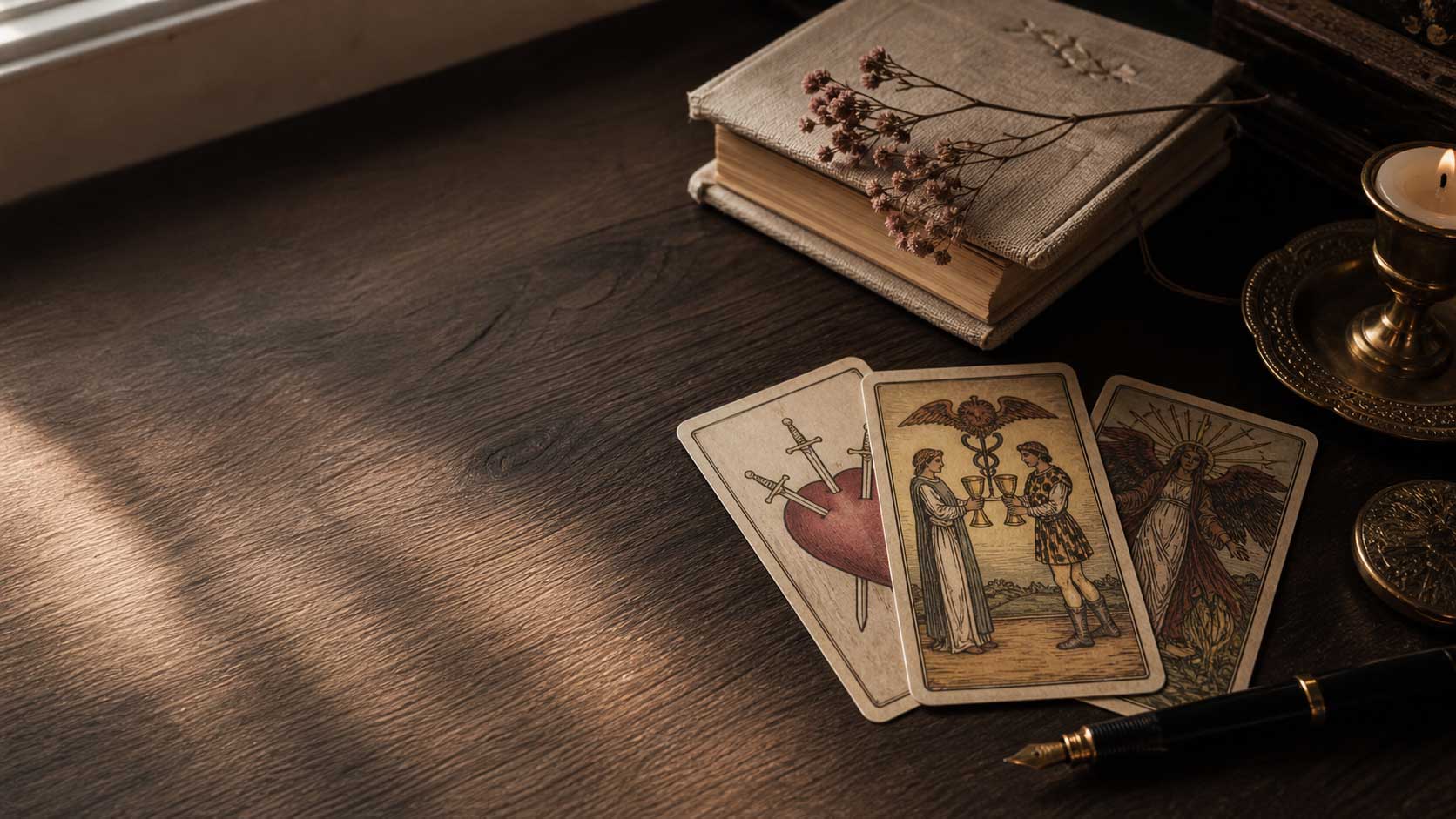
The short answer: Blind and low-vision readers can approach tarot through card names, usable guidebook text, descriptions, and a reading method that fits their access needs. Image symbolism is one optional source of information. Check the format and tools you plan to use, and keep a description of what is on a card separate from any interpretation of it.
A guide that says “notice where your eye goes first” assumes a particular way of meeting the card. It is not the only way to begin. A card name, a clear description, or a guidebook passage can also give you something to think with.
Blindness and low vision do not describe one set of preferences. You may use magnification, speech, braille, assistance from another person, a mixture of tools, or something else. Start with the information you want and the format that works for you.
Begin with reliable card identification
For a physical deck, consider how you will identify the card name and, if you use them, reversals. Before buying a specially formatted deck, check what is actually included, how the labeling works, and whether the guidebook comes in a usable format. A product described as accessible may still not fit your needs.
If you adapt cards with labels or use a helper, decide how you want the draw to work. Labels that make cards identifiable by touch can change how you select them. You can choose a deliberate card or use an agreed drawing method; neither requires pretending you did not notice what you noticed.
Do not rely on an uncertain image-recognition guess as the sole identification. If the card name cannot be confirmed, leave that card out or verify it another way.
Ask for description before interpretation
A useful description separates the visible scene from a proposed meaning. “A seated figure holds a cup” describes something in an image. “This person is emotionally unavailable” is an interpretation, and may not follow from the scene at all.
If someone describes the artwork for you, ask them to begin with the card title, main figures, objects, and setting. You can request additional detail when it helps. You do not need a full inventory of every color and background shape for each reading.
The deck's own guidebook may help explain the artist's choices. An AI-generated description can omit or invent details, so keep uncertainty visible and avoid treating it as a verified account of unfamiliar artwork.
A reading without an image-dependent instruction
Choose two positions: “What needs my attention?” and “One action I can consider.” Record the card name beside each position in a format you can return to.
If Temperance is in the first position, you might explore pacing or combining different demands. If the Page of Pentacles is in the second, you might consider learning one practical step. Check the guidebook associations and your context; you do not need to describe either illustration to use those prompts.
Keep one sentence about what fits and one about what remains uncertain. Spoken notes can work if that is your preference, but consider who can hear or access a recording when the question is private.
Check the whole tool, not only the first screen
For any digital reading tool, check whether you can enter the question, identify controls, reach the card information, read the output, and return to it. Use your own device and access tools to assess the flow. This page does not certify Eldrin or another product as compatible with a particular setup.
For a related but different question, see reading tarot without mental visualization. If you choose to try Eldrin, begin with a low-stakes question and check whether the information and controls work for you. A reading should leave you with usable language and your own judgment intact.
Tarot clarity
Turn the card meaning into a useful next question
Use Eldrin to connect the symbolism to your real situation without turning one card into a fixed verdict.
Ask about your cards->Best when you want interpretation with context.
Questions people ask
Do I have to see tarot artwork to read cards?
No. You can work with card names, meanings, spread positions, and your question. Artwork offers another possible source of symbolism, but you do not have to use every detail to make a reflective reading.
Does Eldrin guarantee compatibility with my screen reader?
This article makes no compatibility guarantee. If you choose to try Eldrin, check the question, card information, controls, and reading output with your own device and tools before relying on the flow.