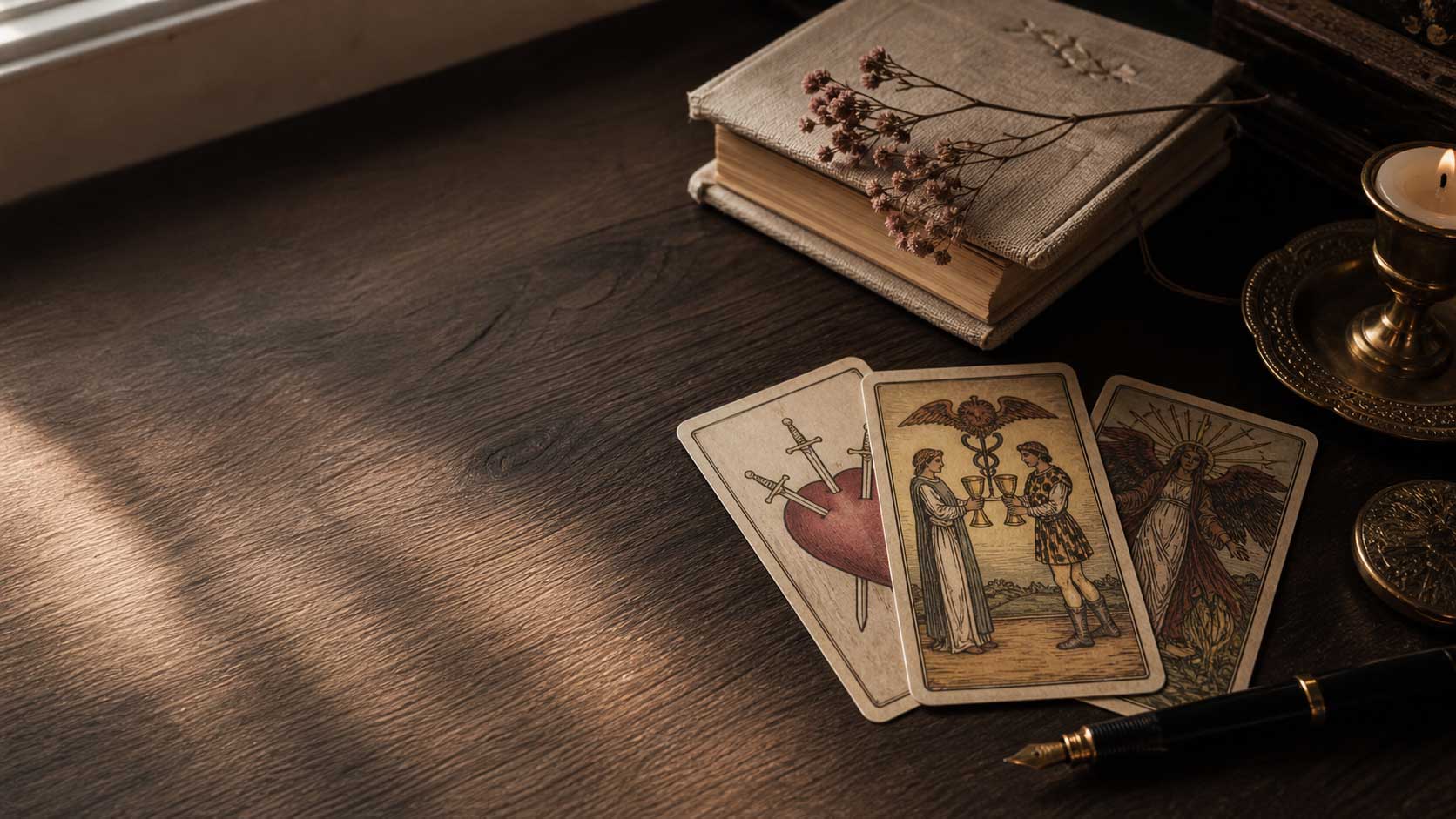
The short answer: If glare hides a tarot image, change the light or viewing angle before interpreting it. Look at one card at a time, record what is actually visible, and use the guidebook for details you cannot see. A reflection on the surface is not an extra symbol in the card.
Check what the light is hiding
You tilt a glossy card and the figure disappears under a bright patch. Tilt it the other way and the face returns, but the suit symbol vanishes. Before deciding that the image is mysterious or difficult to read, give yourself a clearer view.
The first task is observation: what is printed on the card? Interpretation comes afterward. A white reflection across the picture is not a new cloud, a missing face, or a message that the card is withholding something.
Tarot clarity
Turn the card meaning into a useful next question
Use Eldrin to connect the symbolism to your real situation without turning one card into a fixed verdict.
Ask about your cards->Best when you want interpretation with context.
Try one reversible change at a time
- Move the light. If a lamp is reflecting directly toward you, move it to the side or use softer indirect light where practical.
- Change the angle. Tilt the card slightly or move your seat. Check whether the detail becomes visible without making the rest of the image harder to see.
- Reduce the spread. Lift one card to examine it, then return it to its position before picking up the next.
- Keep the order in a note. Write the position and card name so rearranging for visibility does not change the reading structure.
You do not need a perfect photograph of the whole spread to read it. A clear look at each card and a written sequence may be enough.
Make an observation note before a meaning note
Use two short lines. First: “I can see a seated figure holding a cup; the background detail is unclear.” Second: “The cup draws my attention to how I receive something.” The second line is your interpretation, not another visual fact.
If you later see that the background contains a detail you missed, you can revise the observation without treating the whole reading as invalid. You are learning to look closely, not taking an exam with one irreversible answer.
For example, if glare hides the surroundings on a Cups card in an “available support” position, avoid inventing an isolated setting and concluding that no help exists. Check the picture or guide, then ask what support you can actually name in your life.
Use a reference without pretending it is the same image
The deck’s guidebook may describe a detail that is hard to see on the card. A clearly reproduced image of that exact deck may also help. Keep an image from another deck separate: the title may match while the artwork differs.
If you cannot make out a symbol, leave it out of the reading rather than filling the gap with certainty. You can work with the title, position, documented meaning, and details you can see. For broader issues with tiny artwork or text, see tarot cards that are too small to read.
Let the setup serve the reading
Try a short session with one card and one question. Keep whichever lighting arrangement makes observation easier. You do not have to buy another deck or alter the card surface to complete this exercise.
Avoid scraping the finish or adding a coating as an improvised fix; those changes can damage the deck. If you are considering protective covers, the guide to tarot card sleeves addresses that separate choice. For today, the useful result is simple: a visible detail, an interpretation you can explain, and one question that fits the situation.
Questions people ask
Does a bright reflection on a tarot card have a meaning?
It is a lighting effect, not a printed part of the card. Adjust the setup before interpreting the artwork so a reflection does not become evidence for a story.
Should I change the card surface to stop glare?
Try reversible changes first: move the lamp, tilt the card, or read one card at a time. Scratching, sanding, or applying a coating can permanently alter a deck.