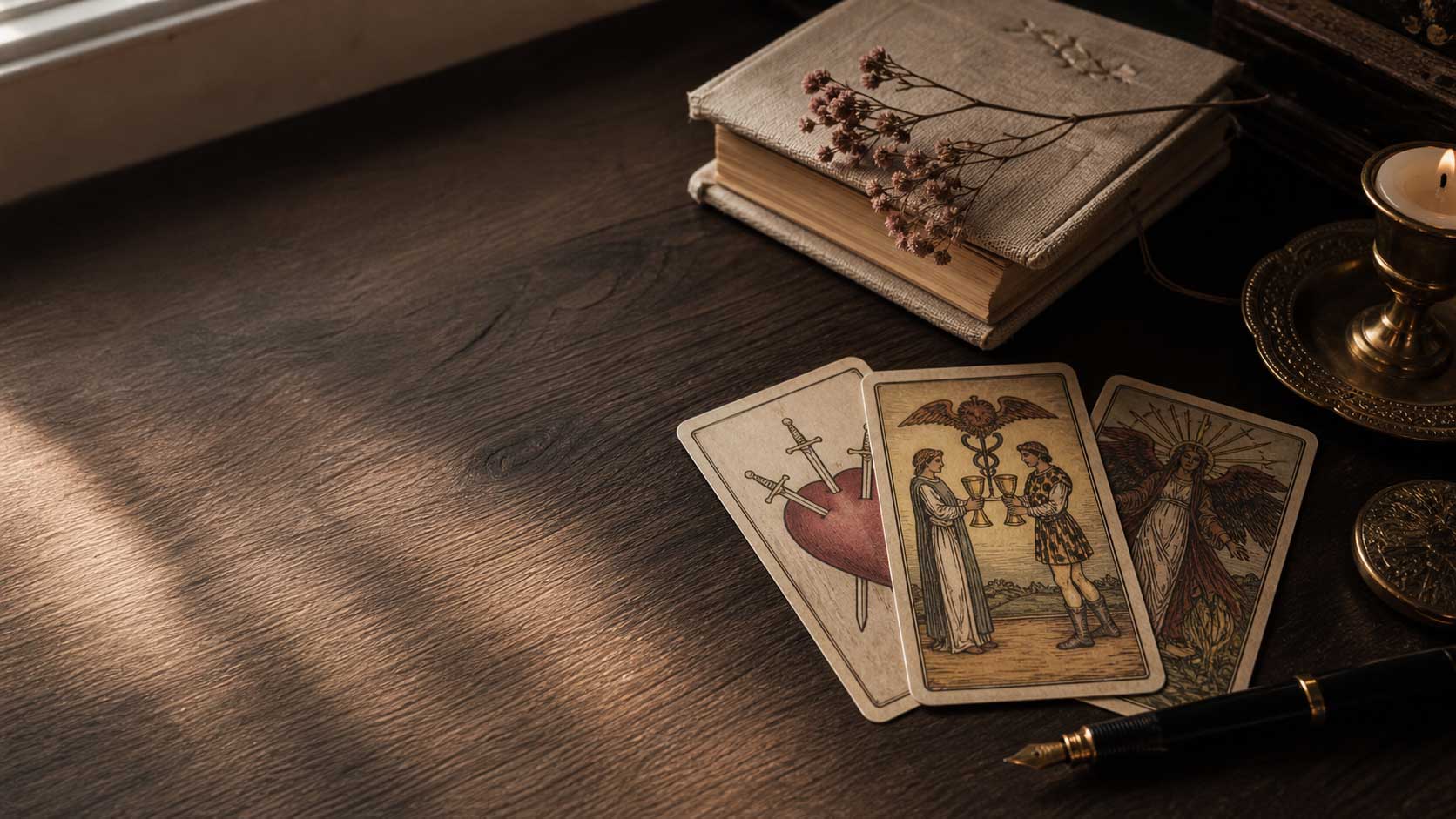
The doorbell rings halfway through your spread. A child needs you, a call comes in, or you realize you are too tired to finish. If you are new to tarot, a small interruption can become a new worry: did you lose the reading, break the ritual, or miss a message?
A reflective practice can make room for an ordinary day. You are allowed to put the cards down.
The short answer: You can pause a tarot reading and return later. Record the question, spread positions, cards, and any interpretation already made. When you return, keep the original draw separate from new information and decide whether the question still fits. An interruption is not evidence that the reading was rejected or that you need to draw again.
Save enough context to avoid reconstructing the answer
A list of card names is helpful, but it may leave out the reason you pulled them. Before clearing the table, make a small record:
- The original question, in the words you used.
- Each position label and the card assigned to it.
- Upright or reversed orientation, if your method uses reversals.
- The interpretation you had reached, including what remained uncertain.
- The date and a note that the reading stopped here.
If you use a photo, keep it somewhere appropriate for the details visible in it. You can use initials or a general situation label in your notes. A private reflection does not need another person’s full name or a copy of their messages.
Return to the question before returning to the symbolism
When you have time again, read the original question and notes first. Ask what has happened since you stopped. If nothing relevant has changed, continue interpreting the same cards in their original positions.
If new information has arrived, write it below a separate heading. Suppose you paused a reading about how to prepare for a conversation, and the person has since cancelled it. The cancellation is a new fact. Do not reinterpret an earlier card as proof that you knew it would happen. You may now need a different practical question, or no reading at all.
You can also decide the unfinished reading is no longer useful. “I did not finish this one” is an adequate closing note.
Tarot clarity
Turn the card meaning into a useful next question
Use Eldrin to connect the symbolism to your real situation without turning one card into a fixed verdict.
Ask about your cards->Best when you want interpretation with context.
Continue, close, or begin a clearly separate reading
Continue when the question still fits and you have the original layout recorded. You do not need an extra card just to compensate for the gap in time.
Close when you have enough to reflect on, no longer want to explore the subject, or cannot reconstruct the positions reliably. Uncertainty is better than assigning convenient positions after the fact.
Begin separately when there is a genuinely new question. Date the new draw and keep the earlier record. This makes it easier to notice whether you are exploring changed circumstances or trying to get a more comfortable answer.
A simple example of a pause that stays small
You draw three cards for “What can help me approach tomorrow’s meeting?” You interpret the first card, then need to leave. Note the three positions and cards, write one sentence about the first, and stop.
Later, reread that sentence, interpret the remaining two positions, and choose one preparation task. The pause does not require a cleansing routine, a replacement spread, or an explanation of why someone called at that moment. If a personal ritual helps you settle, you can use it as a preference rather than a condition you must satisfy.
The trust boundary
An interruption cannot establish a supernatural warning or invalidate your judgment. Do not make other people’s everyday needs into signs about the reading. If continuing feels tense or compulsory, stop. For help preserving the layout, see reading order and spread positions. To finish with something concrete, try a simple closing practice.
Questions people ask
Do I have to reshuffle after an interruption?
No universal rule requires reshuffling. You can continue from a written record of the original draw. If you choose a new reading, label it separately so it does not quietly replace an answer you disliked.
Can I put the cards away and read them later?
Yes. Write down the card names, positions, and orientations first, or use a private photo if that suits you. You do not have to keep a spread physically laid out to revisit your notes.
How long can I leave a tarot reading unfinished?
There is no universal time limit. Ask whether the original question is still relevant and whether you have enough context recorded. If circumstances have changed or the record is unclear, close it as unfinished rather than inventing the missing details.