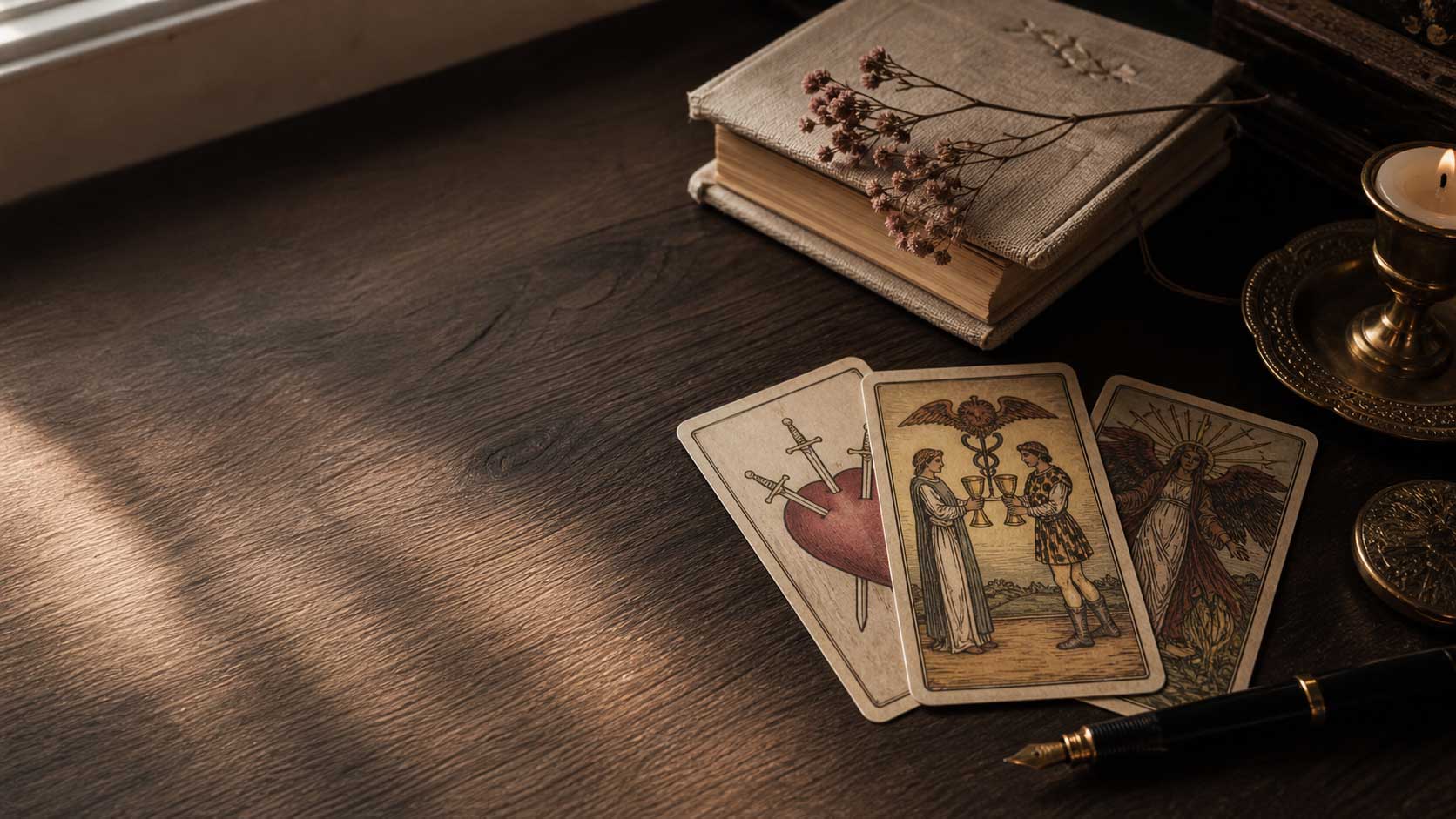
The short answer: You can draw tarot cards with either hand. Some readers include a chosen hand in a personal ritual, but that choice does not establish a reading’s accuracy. Use a comfortable method, decide how you will select cards beforehand, and keep interpretation grounded in the question and spread.
Separate a ritual preference from a requirement
You learn a shuffle, reach for a card, then pause because someone said you must use your left hand. If you are left-handed, have limited movement, or simply handle the deck more easily another way, this can turn a small practice choice into a worry that you have done the reading wrong.
People use different rituals. You can respect a practice someone has chosen without treating it as a rule every reader must follow. If you follow a particular teacher or tradition, ask what the hand choice means within that approach. A symbolic explanation is not a test that proves one hand produces truer answers.
Choose the movement that works at your table
Try an ordinary draw without interpreting it: mix the cards in a way that is comfortable, place them on a clear surface, and take a card from the top. Notice whether the movement is easy and whether the cards remain manageable. Either hand, both hands, or an agreed assist from another person can be part of the setup.
If picking from a fan is awkward, you can use a stack instead. If you want a helper to move cards, agree on the selection rule before beginning so they do not choose an interpretation for you. You do not need to push through discomfort to make the practice count.
Set one rule, then let the reading begin
For a small reflection, decide the question, card count, and selection method before looking at the cards. For example: “I will draw the top three cards for what needs attention, what support is available, and one next step.” The rule gives the exercise an ending; it does not promise a particular outcome.
If you accidentally use the other hand, you can continue. A different hand does not by itself require a new shuffle or a replacement card. Notice whether the urge to restart comes from a clear method change or from disliking the answer. Repeating the draw until it feels reassuring can make the exercise harder to finish.
Put the meaning work where it belongs
After drawing, focus on the actual cards and their positions. If the Four of Pentacles appears as a next-step prompt, you might reflect on what to protect or hold more lightly in your situation. Which hand lifted the card does not establish which interpretation fits.
Before using an AI interpretation, keep the question and card names clear; you do not need to share personal details about your body to justify your method. You can bring one bounded question to a reading or end the exercise with your own note. Comfortable handling and a clear stopping point are enough for this practice.
Tarot clarity
Turn the card meaning into a useful next question
Use Eldrin to connect the symbolism to your real situation without turning one card into a fixed verdict.
Ask about your cards->Best when you want interpretation with context.
Questions people ask
Is drawing with my right hand bad luck?
You do not need to treat a right-hand draw as a bad omen. Hand choice can be a ritual preference; it is not evidence that something bad will happen.
Do I need to redraw if I used the wrong hand?
You can keep the original draw. Unless you intentionally chose to change the exercise, using a different hand does not require starting again.
Continue with a related Eldrin guide, or browse the Eldrin blog.