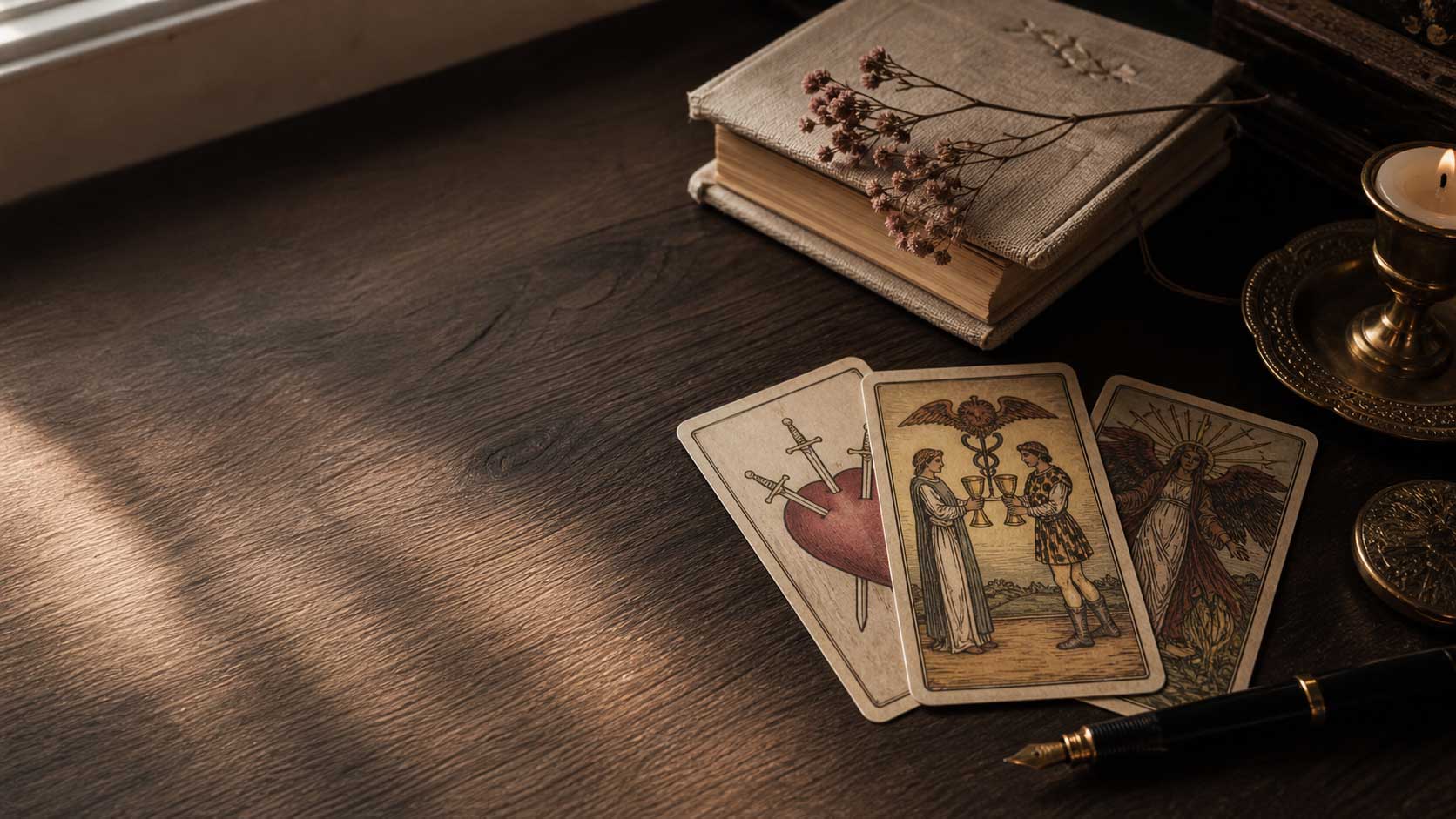
The short answer: You do not have to keep reading with a tarot deck whose artwork you dislike. Identify whether the problem is taste, unclear imagery, or a particular upsetting scene. You can consult the guidebook, change how you study, or set the deck aside. Discomfort is not proof that the deck has a message you must accept.
Owning a deck does not create an obligation
Perhaps the pictures looked different online, or someone chose the deck as a gift. You like the idea of using it, but every reading begins with irritation or unease. That is enough reason to pause and consider a different approach.
This is a question about an already-owned deck, rather than how to choose your first one. You do not need to explain your taste as blocked intuition. A purchase, a gift, or an attractive box does not require you to build a daily practice around images you do not enjoy.
Name which part is not working
Try three plain descriptions: “I dislike the style,” “I cannot distinguish the scenes,” or “One image brings up something I do not want to work with today.” More than one can be true. Each points toward a different response.
If the symbolism is unclear, the deck’s own guidebook may explain an artistic choice. If the style simply does not appeal to you, more explanation may not help. If an image is upsetting, you can close the box without making the discomfort a lesson. You do not have to disclose a personal history to justify that choice.
Try a small study exercise only if you want to
Choose one card you feel comfortable looking at. Write what you can actually see, then read the corresponding guidebook entry. Keep your observation separate from the author’s interpretation. Ask whether that combination makes the card easier to understand.
For example, you might recognize a person carrying a heavy bundle but dislike the palette. You can still study the theme of effort while deciding this is not the deck you want to use. The exercise is an option for learning, not a test you must pass before setting the deck aside.
Do not force a positive meaning onto every image
A stark card can support a useful reflection, but you are allowed to decide that its presentation is not right for you. Likewise, pleasant artwork does not make a reading more accurate. Separate the aesthetic experience from claims about what the deck can know.
If an interpretation tells you that disliking an image proves you are refusing a truth, ask what evidence supports that claim. A card cannot establish a hidden flaw in you. Use language you can examine: “This picture makes it difficult for me to focus” is enough.
Make a practical choice about the deck
You can keep it as art, use it occasionally for study, store it for another time, or pass it on honestly about its condition. You can also choose a familiar deck without buying anything new. There is no required ceremony for stopping a practice that is not helping.
If you want a reading, bring a question about your situation rather than asking a new reading to certify that the old deck approves. At Eldrin, the useful aim is a reflection you can understand and question. Your ability to stop, disagree, or use another tool belongs inside that practice.
For one reflection, bring the facts you know and ask: what can I clarify or do next? Keep the answer beside your own judgment.
Tarot clarity
Turn the card meaning into a useful next question
Use Eldrin to connect the symbolism to your real situation without turning one card into a fixed verdict.
Ask about your cards->Best when you want interpretation with context.
Questions people ask
Does disliking tarot artwork mean the deck rejects me?
No. Disliking images does not provide evidence of rejection or a supernatural problem. It may be a matter of taste, readability, or comfort.
Should I remove a card whose artwork I dislike?
You can study selected cards, but removing one changes the deck available for a full-deck draw. Label that as a partial-deck exercise, or use a different complete deck if you want all cards available.