You have been keeping two possibilities open: perhaps this connection needs time, perhaps waiting is becoming the whole relationship. Then a conversation or a missed plan makes it harder to keep saying “I do not know.”
The short answer: the Two of Swords reversed in love can describe a stalemate becoming harder to maintain. That may bring useful recognition, decision pressure, or overload rather than an instant answer. It asks you to identify the choice in front of you without pretending the cards can make it.
Decision clarity
Use tarot to think clearly before you stay or walk away
A grounded spread can help you name the pattern, the cost of waiting, and the next honest choice.
Start a decision reading->The reading should support your agency, not replace it.
A loosened stalemate is not the same as a settled choice
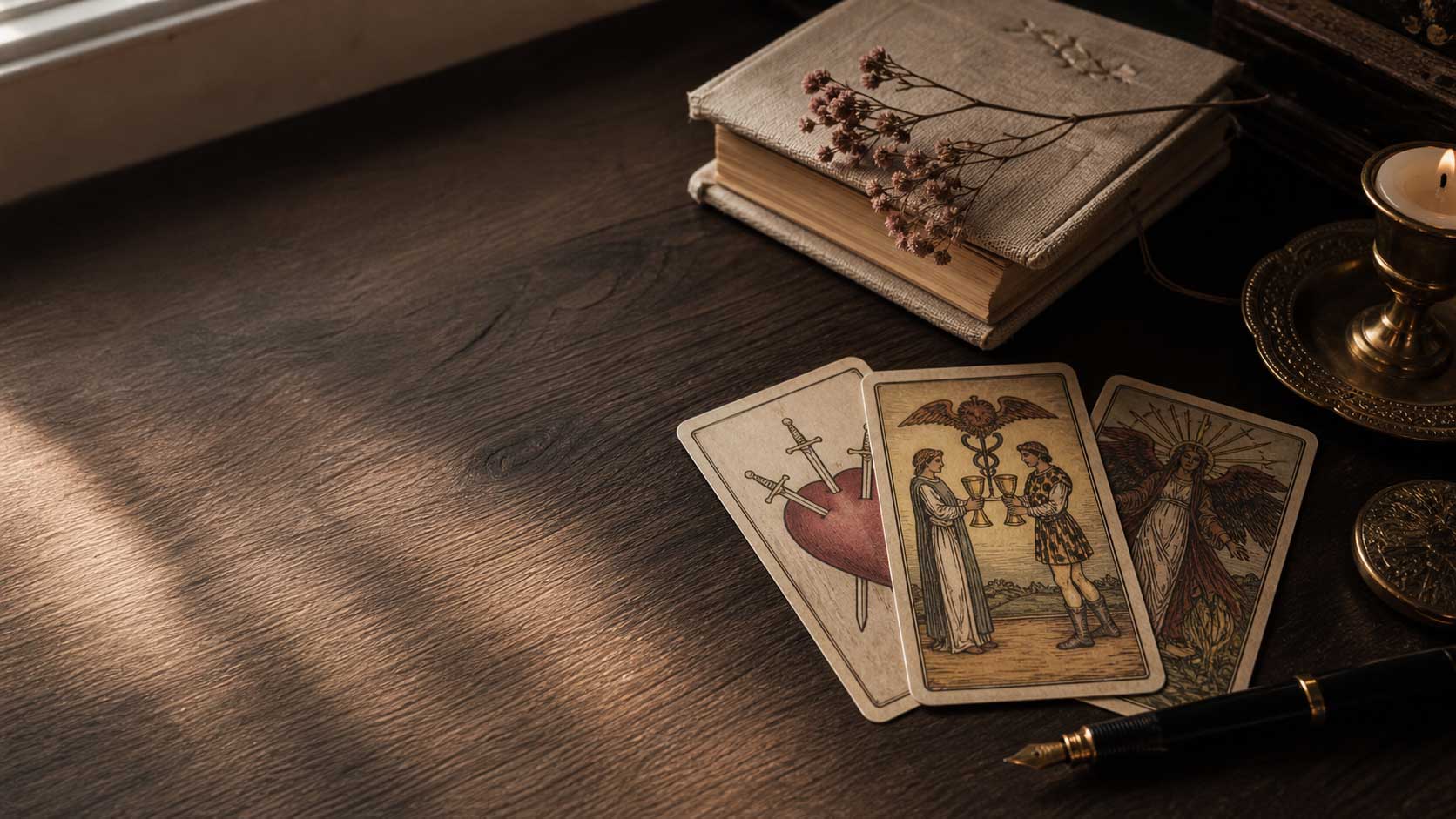
The Rider–Waite–Smith Two of Swords shows a blindfolded figure holding crossed swords. One way to read the reversal is to ask what happens when that held position can no longer stay comfortable. Perhaps a fact has changed. Perhaps your willingness to wait has changed. Those are different kinds of information.
You might now know that you want a committed relationship. You may still not know whether the other person wants one with you. Your clarity does not fill in their answer.
Try finishing two separate sentences: “What I can say now is…” and “What I still need to ask is…” A reading becomes more useful when it keeps those sentences separate.
Read the reversal in its actual position
- As your current experience: you may be tired of weighing the same possibilities or trying to avoid disappointing anyone.
- As an obstacle: too many imagined outcomes may be making one small conversation feel like a permanent verdict.
- As advice: decide what information is sufficient for the next step, rather than waiting for certainty about the whole future.
If the position asks about someone else’s feelings, hold the interpretation especially lightly. “They are finally ready to choose me” may be the answer you want, but the card cannot establish that. A more useful question is what a clearly communicated choice would look like.
Reduce the decision to a size you can act on
Instead of “Should I stay forever or leave tonight?”, a next step might be: “I will ask whether we are both interested in exclusivity.” You are deciding to have a conversation; you are not promising its outcome.
- Write the fact: “We have not discussed what dating means to each of us.”
- Name your need: “I need to know whether we want the same kind of connection.”
- Choose the action: “I will ask directly at a calm time.”
- Keep your response available: “I can decide what works for me after hearing the answer.”
If you already asked and received a clear answer, another spread should not be used to negotiate it away. If you need time to absorb it, that is a separate need from needing more information.
Keep choice and pressure apart
The card does not create a deadline. You can pause when you are overwhelmed, and you can act on a boundary without waiting for a perfect explanation. If there is coercion or a concern about safety, seek trusted practical support; do not let an interpretation pressure you into a confrontation.
Compare this with the upright Two of Swords. If two paths still need comparing, use a two-path spread to examine the conditions and costs while keeping the final choice yours.
Questions people ask
What does the Two of Swords reversed mean in love?
It can suggest an avoided decision coming into view, information that unsettles a stalemate, or too much pressure to choose. Read it through the spread position and actual circumstances; it does not automatically mean clarity has arrived.
Does the Two of Swords reversed mean a breakup?
No. It cannot predict a breakup or instruct you to stay. It may help you identify which agreement, boundary, or question can no longer remain vague.
Does this card mean someone has chosen me?
No. A reversed card is not evidence of another person’s private decision. Treat a clear conversation and sustained actions as information, and leave an unspoken choice unknown.