You replace worn-out shoes, buy a book you wanted, or pay for a class. Then the relief is followed by a familiar thought: that money should have gone to someone else. You find yourself defending a small purchase as though it were evidence about what kind of person you are.
The short answer: tarot can help you reflect on guilt about spending on yourself, but it cannot tell you whether a purchase is affordable or deserved. Check the actual cost and commitments first. Then use one card to explore the rule behind the guilt and choose a practical next step without making your worth part of the calculation.
Tarot clarity
Turn the card meaning into a useful next question
Use Eldrin to connect the symbolism to your real situation without turning one card into a fixed verdict.
Ask about your cards->Best when you want interpretation with context.
Keep the receipt separate from the accusation
Start with what can be checked: the price, any recurring charge, the return terms, and the commitments the purchase affects. If you need help understanding those facts, a card will not supply the missing information.
Then write the accusation in its own sentence: “Buying this means I am selfish.” Keeping the sentences apart lets you address a practical problem if there is one, without turning every expense into a moral failure.
The broader money-anxiety guide covers uncertainty about money. This reflection is specifically about the guilt attached to spending on yourself, including when you already understand the cost.
Ask which rule you are applying
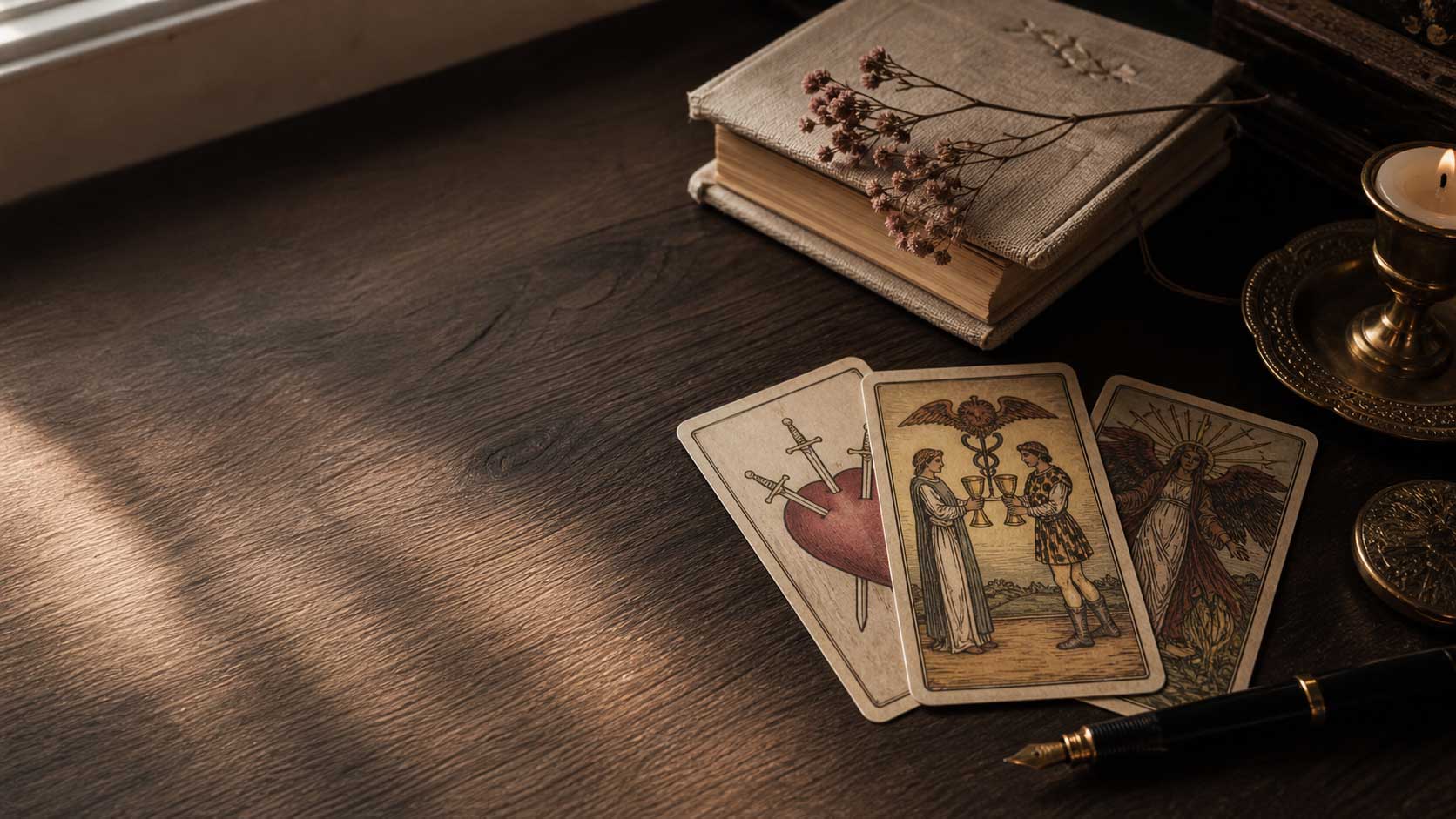
Try, “What expectation am I bringing to this purchase?” Draw one card if you want to, then describe the expectation in your own words. You may notice “Only essentials are acceptable,” “I should give before I receive,” or “Enjoying this will make me careless.” You may notice something else entirely.
A card does not establish where that rule came from. You do not need to invent a childhood story or blame a family member to acknowledge that the rule feels demanding now.
Translate the symbol without turning it into permission
If the Six of Pentacles appears, you might ask whether your idea of fairness includes your own needs. That does not mean you should spend more. If the Four of Pentacles appears, you might explore what you are trying to protect. That does not mean keeping the purchase is wrong.
Either interpretation should lead back to your actual circumstances. The useful output is a clearer sentence about the tension, not a card-based approval stamp.
Choose a response that matches the problem
- There is a practical issue: review the available options using the real terms, rather than another draw.
- The cost is understood but the self-criticism remains: try a neutral sentence such as, “This is a choice I can evaluate without calling myself selfish.”
- You are unsure what you wanted from the purchase: write down the need or pleasure you hoped for before making another purchase to change the feeling.
You do not have to celebrate, justify, or regret the item on command. You can give yourself time to understand what happened.
Close before reflection becomes another expense
A useful stopping note is, “The practical question is X. The feeling I am carrying is Y. My next step is Z.” Keep the next step small and specific. If you bring the question to Eldrin, you can describe the feeling without sharing account numbers, balances, or other identifying financial details.
Tarot is not financial advice, an affordability check, or treatment for distress around spending. If money worries or repeated purchases are causing serious difficulty, seek appropriate practical or professional support. You never need to pay for more readings to become entitled to your own needs.
Questions people ask
Can tarot tell me whether I should buy something?
It cannot establish affordability or decide for you. Use actual prices, commitments, and relevant information for the purchase. Tarot can be an optional way to explore the feeling or expectation surrounding that decision.
What if I feel guilty even when a purchase fits my budget?
You can notice whether the guilt comes from an old rule, comparison, or discomfort having something just for yourself. Those are reflection prompts, not a diagnosis. The feeling does not have to become a verdict on your character.
Should I pull again until I feel better about the purchase?
No additional draw is needed to earn permission or remove guilt. Record one useful thought, return to the practical facts, and let the reading end. If the exercise adds pressure, stop.