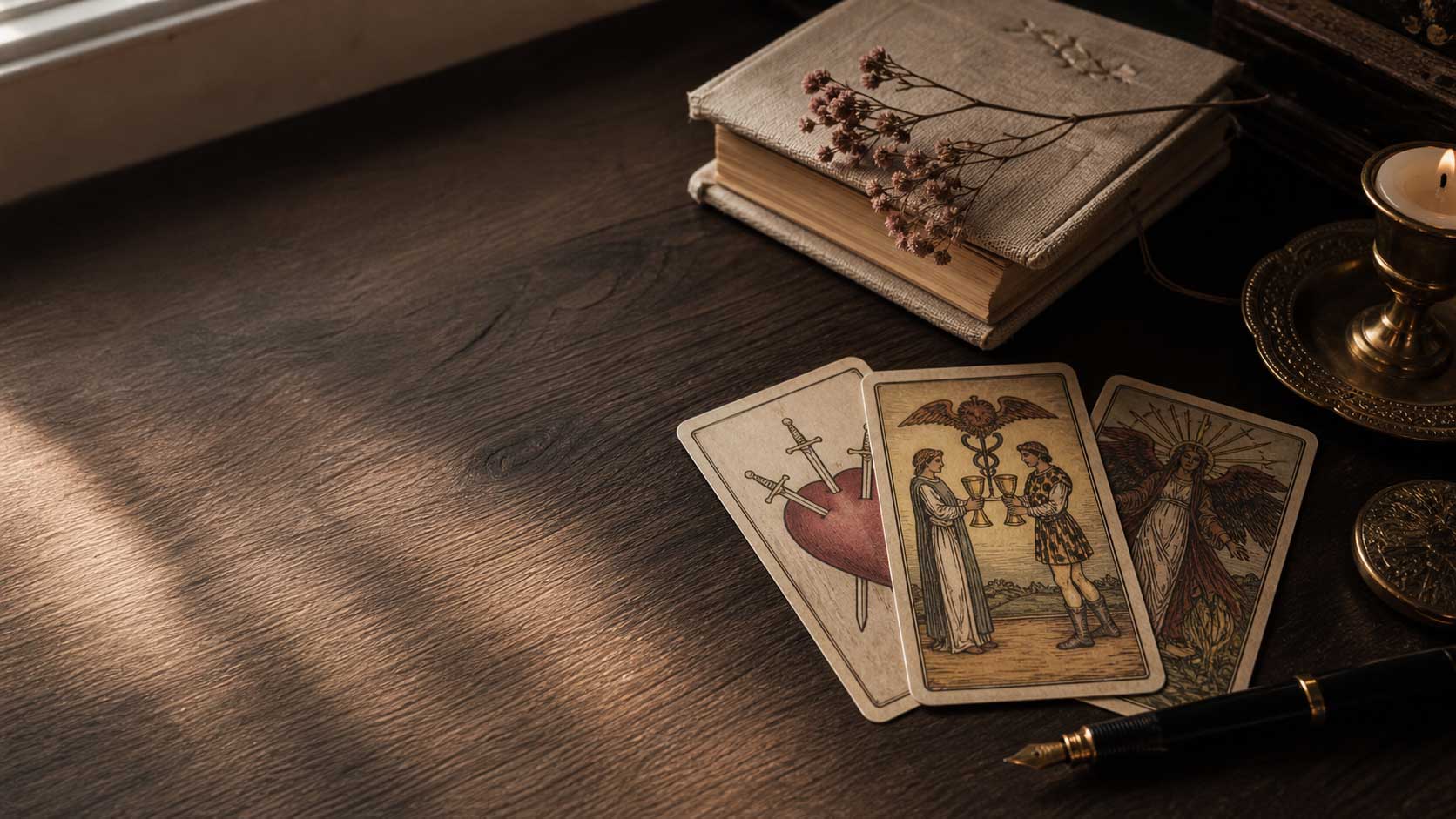
The short answer: Tarot can help you reflect on guilt about quitting a hobby by separating what you enjoyed, what you feel obliged to prove, and what you want to make room for now. A card cannot decide whether to quit or whether the time was wasted. Choose a small pause, experiment, or ending you can review.
Tarot clarity
Turn the card meaning into a useful next question
Use Eldrin to connect the symbolism to your real situation without turning one card into a fixed verdict.
Ask about your cards->Best when you want interpretation with context.
Give the guilt a more specific sentence
“I am a quitter” is hard to respond to. “I paid for a course and do not want the next one” names an actual decision. So does “I liked painting with friends, but I do not enjoy painting alone.” Specificity can reveal what is ending and what you might still want to keep.
A public discussion about leaving hobbies includes different experiences of stopping, returning, and reconsidering past investment. That is context for the emotional question here, not evidence that tarot resolves it.
Before drawing, write three ordinary facts: the last time you took part, how you felt while doing it, and the next commitment you actually have. Keep predictions about being talented, disciplined, or impressive out of those facts.
A three-card reflection with room for an ending
- What did this give me? Name an experience, skill, friendship, or pleasure that can remain part of your history.
- What am I trying to prove by continuing? Notice whether the pressure comes from your own interest, an old promise to yourself, or someone else’s expectations.
- What would make the next step manageable? Translate the image into a pause, a practical conversation, or one small experiment.
If the Eight of Pentacles appears in the second position, for example, you might ask whether practice still feels satisfying or has become a test of worth. It is not an instruction to work harder. If the World appears in the first, you might explore a sense of completion without declaring that the chapter must be closed.
Use those as sample questions. Your actual experience can disagree with the interpretation, and that disagreement is useful information.
Choose between a pause, a smaller version, and a close
Imagine you joined a pottery course because making something with your hands felt good. Now the weekly class is hard to reach, and the thought of another term feels heavy. You might still like the clay while no longer wanting that schedule.
- A pause: take a month without practice and choose a date to check how you feel.
- A smaller version: keep an occasional session without a progress target.
- A close: finish or renegotiate an existing commitment and decline the next one.
These are options to consider, not stages you must complete. You can keep a few materials while deciding. You can also finish a borrowed item’s return or tell a club you are leaving without turning that courtesy into a promise to stay.
Keep appreciation separate from future obligation
You can be glad you learned something and stop doing it regularly. The friendships, afternoons, or skills do not disappear because you no longer organize your week around them. A brief note about what the hobby gave you may feel more honest than another attempt to force enthusiasm.
If the central problem is wanting to create but feeling stuck, the creative-block spread fits that different situation. If you feel guilty whenever you stop being productive, reflection on guilt about resting may be closer to the question.
This exercise is for reflection, not a mental-health assessment. A broad or persistent loss of interest that troubles you deserves care beyond a card reading. For today, one clear next step is enough; your hobby does not have to answer for your whole life.
Bring one question into the reading
Try: “What did this hobby give me, and what would I like to make room for now?” If reflection feels useful, start a reading with Eldrin. You keep the decision.
Questions people ask
Can tarot tell me whether I should quit a hobby?
It cannot make that decision for you. You can use the images to name what you miss, what feels burdensome, and which small next step fits your current circumstances.
What if I spent a lot of money or years on it?
Past investment can explain why the decision feels important, but it does not tell you what future participation must look like. Review any real commitments separately and give yourself time before making irreversible choices about belongings.
What if I cannot tell whether I need a break or want to stop?
Try a defined pause or one low-pressure session, then review your experience. You do not need to settle your whole identity today, and you do not need another card to validate every change of mind.