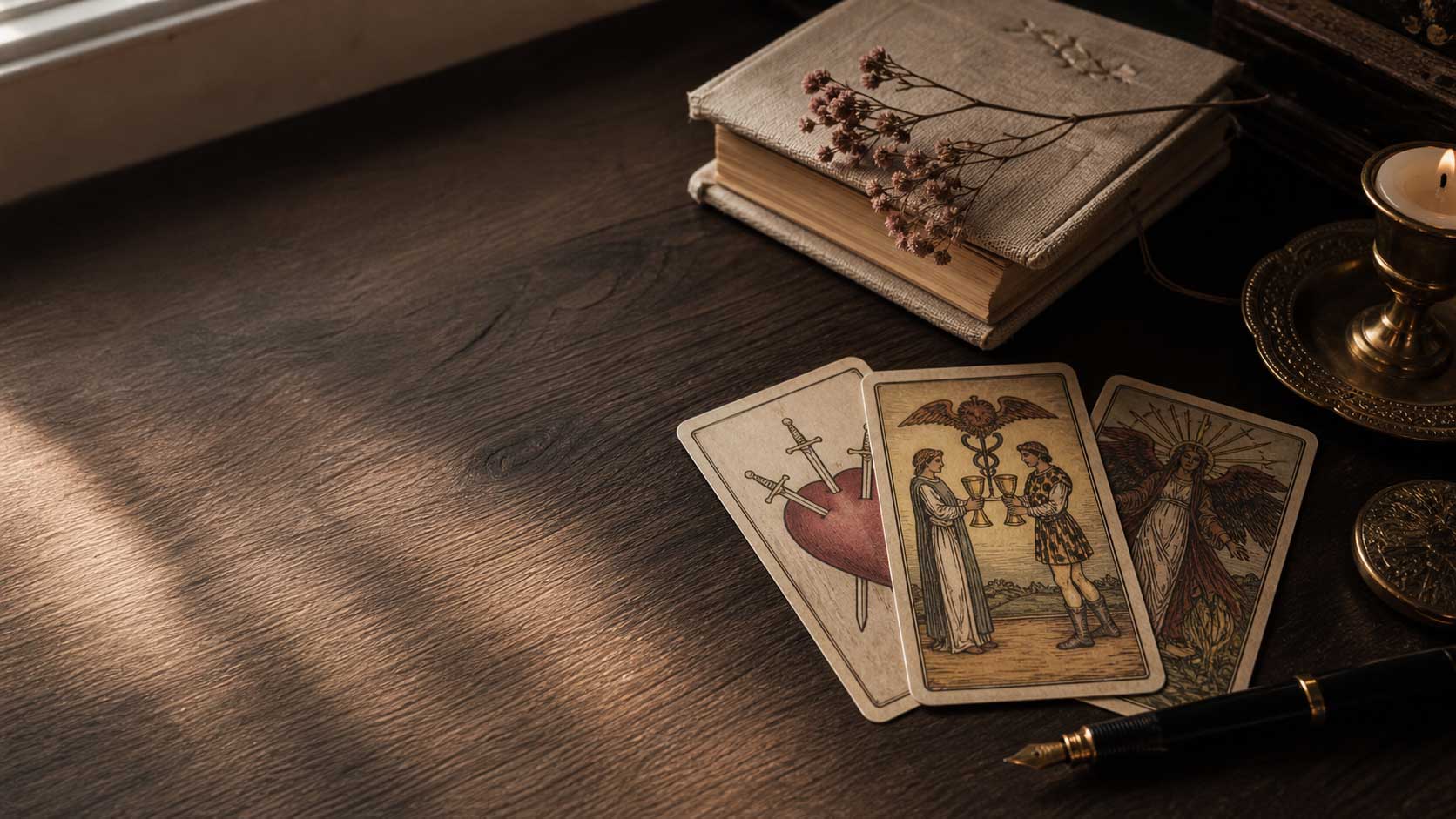
The short answer: When happiness brings guilt, a small tarot reflection can help you name the rule behind the discomfort and check whether there is an actual responsibility to address. A card cannot decide what you deserve or require you to feel differently.
A laugh can arrive before you feel ready for it
You enjoy a meal, laugh at something ordinary, then catch yourself: should I really be having a good time? Someone else may be struggling, or an earlier part of your life may still hurt. The good moment suddenly feels like something you must justify.
You do not need to make the feeling disappear before you can reflect. Start with the event at its actual size: “I enjoyed ten minutes.” That sentence does not claim everything is fine. It also does not tell you what you should feel next.
Private AI tarot
Get a reading that fits your situation
Share the question you are actually carrying and let Eldrin help you read the pattern more clearly.
Start a free reading->No sign-up required.
Separate a responsibility from a private rule
Ask whether there is something concrete you have left undone. Perhaps you promised to call someone and forgot. A call or an honest apology addresses that. Staying unhappy does not complete the promise.
If there is no specific undone task, write the rule you seem to be following: “If I care, I must feel sad all day,” or “I can enjoy myself only when everyone else is okay.” Treat this as a sentence to examine, not a diagnosis or a command to become positive.
Try one card with one bounded question
If cards feel settling, ask: “What would help me receive this small good moment while staying connected to what matters?” Pull one card and stop. Write one possible meaning and one ordinary action. You can do the same exercise without cards.
For example, if the Six of Cups makes you think of a shared memory, you might write that memory down and still keep your dinner plans. If the Ten of Wands highlights how much you are carrying, you might ask for help with one task. Neither card grants permission to be happy; it helps you find words for your own choice.
Keep both feelings without testing them
You can care about a difficult situation and enjoy a song. You can miss someone and find a conversation funny. There is no need to pull again to see which feeling is the true one.
Choose a small response: stay with the meal for another few minutes, send the promised message, or tell a trusted person that joy has been arriving with guilt. Avoid turning the exercise into a daily test of whether you have recovered enough. For a different kind of self-imposed rule, see guilt about resting.
Let support matter more than the exercise
This page is an everyday reflection, not treatment for grief, depression, or trauma. Cards cannot measure loyalty, decide how long sadness should last, or tell you that a person who died approves of your choices. If guilt is persistent, distressing, or interfering with ordinary life, seek support from a trusted person or qualified professional. You can stop the reading at any point.
Questions people ask
Does feeling happy mean I no longer care?
A good moment alone cannot establish that you stopped caring. Look at the commitments you want to keep rather than using uninterrupted sadness as a test.
Should I ask tarot whether I deserve happiness?
Try a less judging question, such as what would help you receive one small good moment. A card cannot determine your worth or award permission to feel joy.