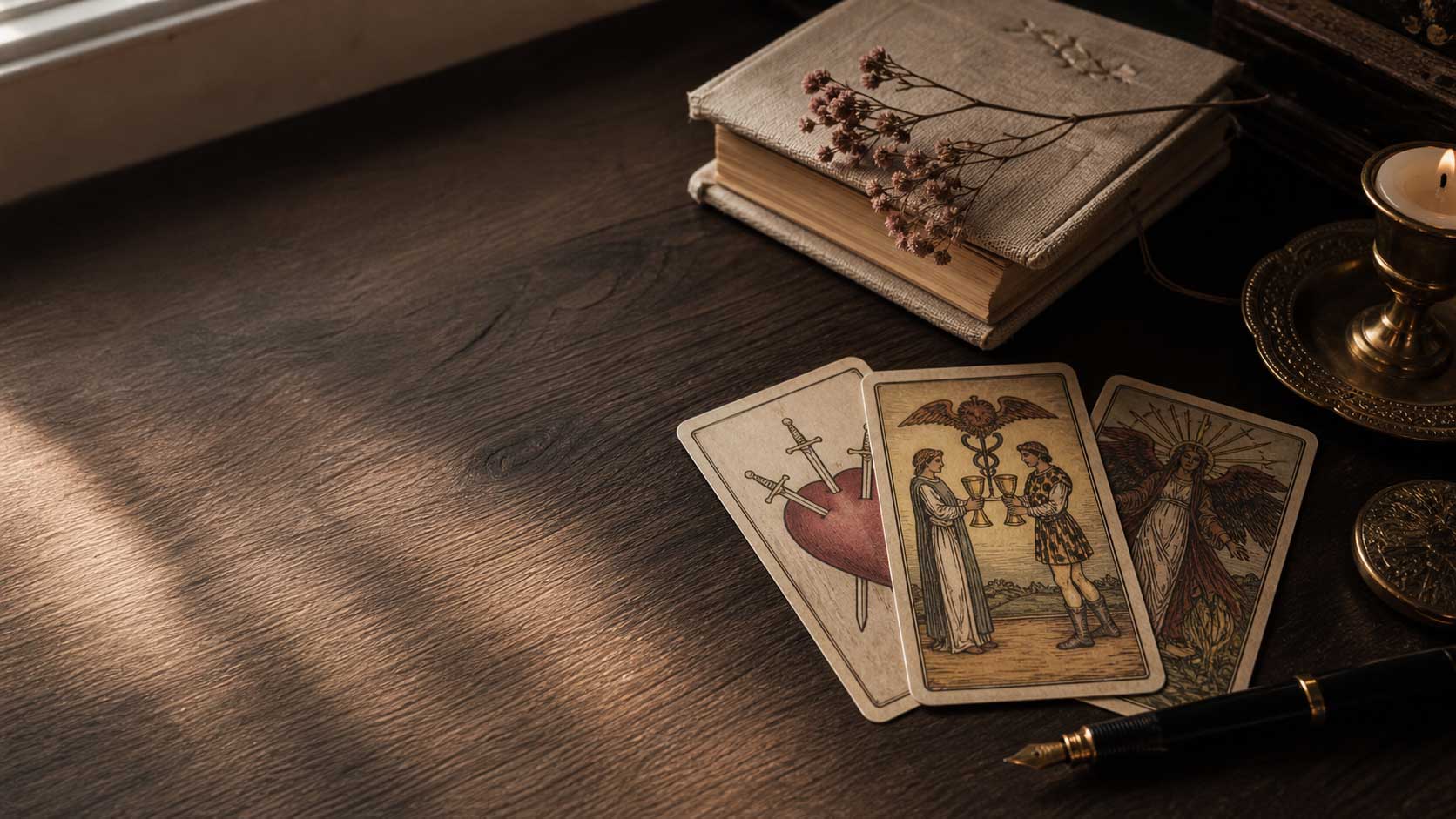
After losing a sentimental item, tarot can help you name the memory, guilt, or sense of connection involved. Make a practical search plan first. The cards cannot locate the object, identify who has it, or promise its return. A reflection can focus on how you want to care for the memory now.
Let the loss be specific
A missing bracelet may bring back the afternoon someone gave it to you. A lost notebook may have held the handwriting you cannot recreate. When an object carries that much, “you can buy another one” may miss what hurts. Give yourself a sentence that names the particular loss.
You might write, “I miss having something my grandmother touched,” or “I am upset that the notes from that trip are gone.” The sentence does not have to explain the whole relationship. It only needs to give the feeling a shape you can recognize.
Make a practical search plan before a reading
Write down the last place you remember using the item, the bags or rooms you have already checked, and any lost-property contact you can ask. Choose a reasonable time for the next search. A written list can help you avoid repeating the same search simply because the feeling has returned.
If the item has security implications, such as keys or identification, take the relevant practical steps promptly. For a sentimental object, decide whether there is one useful person to contact. A card cannot provide a location, establish theft, or tell you that another person is responsible.
Try a three-card reflection about the feeling
If you want a reading once the immediate search is handled, use three positions. The first asks what the object represented. The second asks what you need while the loss is unresolved. The third asks how you might preserve part of the memory. Keep the question with your experience.
As an illustrative reading, the Six of Cups in the first position might bring attention to a shared ritual or a familiar place. The Four of Swords in the second could suggest taking a break from searching. The Page of Pentacles in the third might invite writing down the story. These are possible reflections, and none tells you where the item is.
Give self-blame a practical limit
You may be able to name a mistake, such as leaving a ring by a sink. That can inform a future habit. Try writing the lesson without a judgment about your character. “I will use a small dish at home” is something you can act on. Repeating “I ruin everything” gives you no search information.
A way to hold the memory might be a note, an existing photograph, a conversation with someone who remembers, or a small familiar activity. Choose only what feels fitting. You do not have to replace the item immediately, create a ritual, or feel better on a schedule.
Let the next step have an end
An Eldrin prompt could be, “I lost an object connected with someone important. What would help me care for the memory while I wait?” Describe its meaning without sharing identifying details or asking the cards to track a person or place. You can also use the same question in a journal.
Finish by choosing one action and a time to stop. If the sadness keeps disrupting daily life, consider talking with someone you trust or a qualified professional. You can seek company and support while the object is still missing. The loss does not need to be resolved before you are allowed care.
Private AI tarot
Get a reading that fits your situation
Share the question you are actually carrying and let Eldrin help you read the pattern more clearly.
Start a free reading->No sign-up required.
Keep exploring
Questions people ask
Can tarot tell me where my lost item is?
A tarot reading cannot reliably locate an object or verify who has it. Use a practical search, lost-property services, and relevant security steps. Keep the reading focused on your feelings and next choices.
Does losing a sentimental item mean I have lost the connection?
The loss can hurt because the object carried a connection. It does not establish anything about that relationship or memory. You can choose another way to remember while still missing the item.