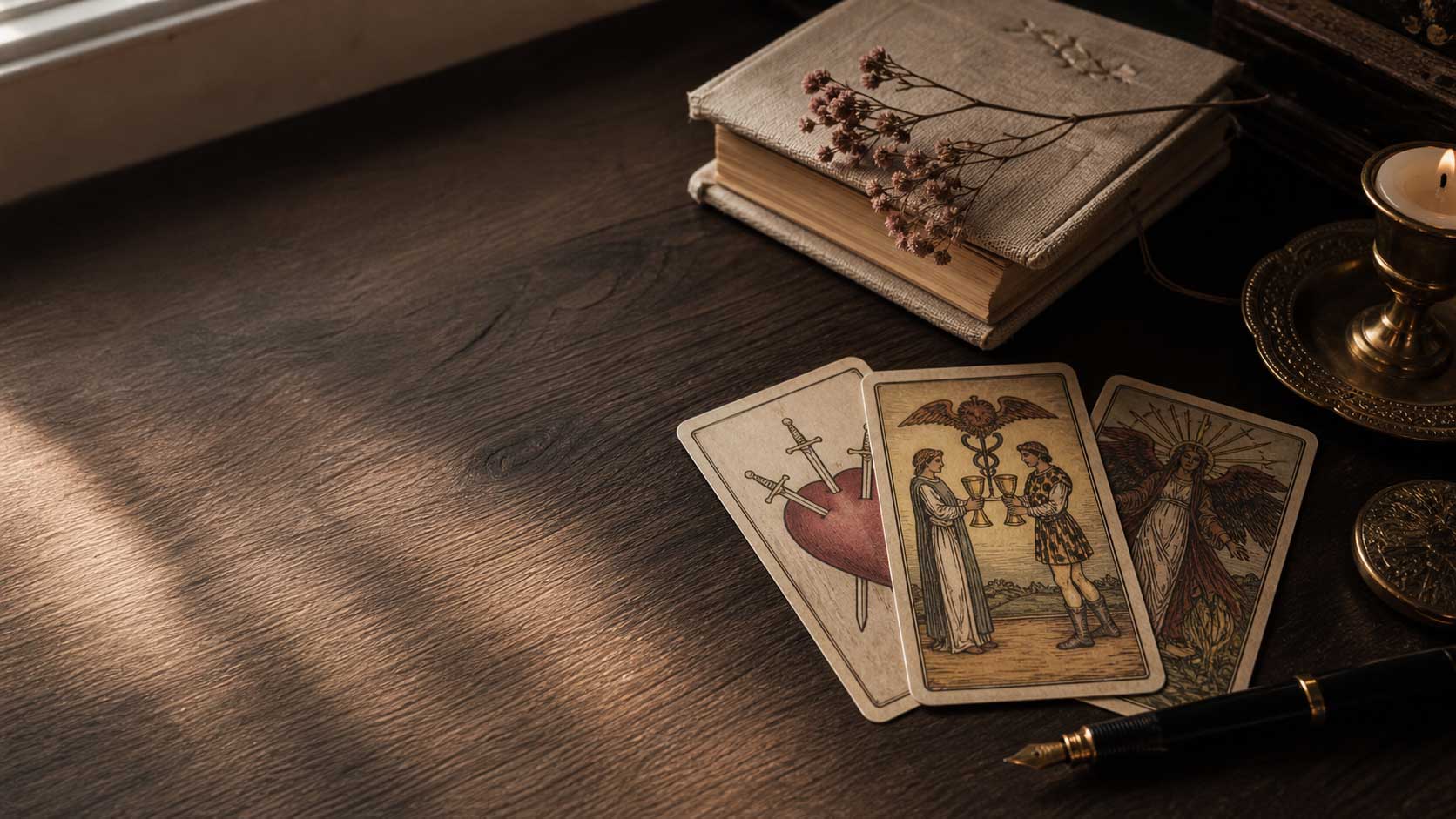
You can retire a tarot deck by setting it aside, storing it as a keepsake, or passing it on to someone who wants it. Check its condition and whether it is complete before offering it. A closing ritual is optional. For disposal, follow local guidance for coated or laminated cards.
Name what you want to change
You may have learned with a deck whose imagery no longer helps you read. The cards may be difficult to handle, or the guide may no longer suit your approach. Sometimes you simply want a break. Start by identifying whether you are setting aside this deck or pausing readings altogether.
You can choose a temporary pause and revisit the decision later. Put a note in the box with the date and your reason if that helps. There is no need to pull a card to ask the deck for permission. Your time, comfort, and interest are enough to guide how you use your own belongings.
Choose a place for a deck you want to keep
Check that the cards are dry, gather any guide or extra cards, and store them in a suitable box or pouch. Keep the deck somewhere it will be protected from moisture and rough handling. If cards are fragile, a container that holds them without pressure may be more practical than a tight elastic band.
A deck can remain a keepsake even when you no longer read with it. You might keep a short note about what you learned or why its artwork mattered to you. You do not have to display it, work through every card one last time, or make yourself feel grateful before closing the box.
Ask before passing it on
If someone might enjoy the deck, ask whether they want it. Describe its condition and check the card list so you can disclose missing or additional cards. Include the guide if you have it. Give the recipient room to decline, especially if their interest in tarot is uncertain.
A library, community group, or donation service may have its own acceptance rules. Ask before leaving a deck there. Passing it on works best when the next owner knows what they are receiving and can choose freely. You can agree on whether the gift includes any sentimental expectations before handing it over.
Keep any closing ritual simple and optional
If you would like a closing moment, write one thing you learned and one way your practice is changing. Then pack the cards away. Another person may prefer to count the cards, tidy the box, and finish there. Both approaches give the practical task an ending.
A difficult reading does not establish that a deck is harmful. If fear is driving you to cleanse, replace, or consult it repeatedly, take a break from the routine and seek grounded support if needed. You can decide how to handle the physical object without resolving every feeling through another reading.
Check disposal guidance when the deck cannot be used
Cards may have coatings, lamination, foil, or other materials that affect local recycling acceptance. Check your local service’s instructions for the actual materials. Avoid assuming that every card belongs in paper recycling. Do not burn coated cards or leave them outdoors as part of a disposal ritual.
If your next step is to try a smaller tarot practice, bring a bounded question to Eldrin, such as “What do I want to keep from the way I have been reading?” A new purchase is optional. You can keep learning, pause, or return later based on what fits your life.
Tarot clarity
Turn the card meaning into a useful next question
Use Eldrin to connect the symbolism to your real situation without turning one card into a fixed verdict.
Ask about your cards->Best when you want interpretation with context.
Keep exploring
Questions people ask
Do I have to cleanse a tarot deck before retiring it?
A cleansing ritual is optional. You can simply check the cards, pack them safely, and choose where they will go. No ritual can verify a prediction or change an event.
Can I give away a used tarot deck?
Yes, if you own it and the recipient wants it. Check completeness, describe damage or missing cards, and include the guide if available. Let the recipient choose how to use it.