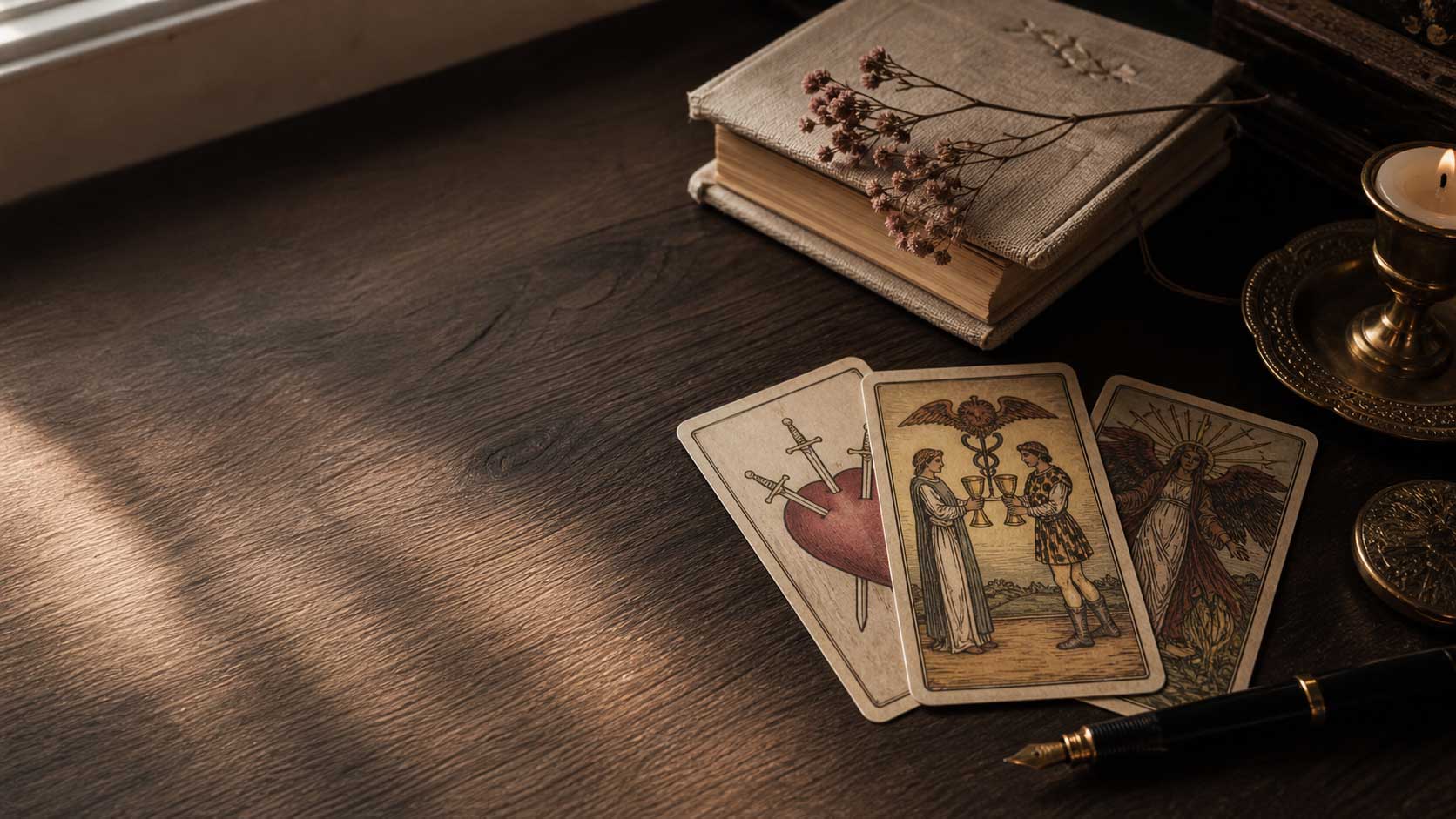
The short answer: You do not need a special tarot cloth to read cards. A clean, dry, stable surface can be enough. A cloth may help define a spread area or make cards easier to handle, but the material does not guarantee accuracy or protect you from a bad reading.
Pictures of tarot tables can make a reading look as if it begins with shopping: a patterned cloth, a particular fabric, and enough room for an elaborate spread. It is easy to wonder whether your plain table is missing something essential.
A cloth can be pleasant or meaningful. It can also be an ordinary practical tool. You can decide what it does for you before deciding whether to use one.
Ask what the surface needs to do
- Keep the cards away from residue: Check for crumbs, moisture, or a sticky patch before setting anything down.
- Make handling comfortable: Notice whether you can lift a card without scraping its edge or whether the fabric catches it.
- Make the spread readable: A plain background may make labels and card edges easier to see than a busy pattern.
- Keep the arrangement stable: Check that the cloth does not slide or bunch when you deal.
These are things you can observe. They do not require an interpretation of the deck’s mood or a claim about the energy of a particular fiber.
Try one card before laying out a spread
Start with a surface you already have. If you use fabric, make sure it is clean and dry, with no loose decorations that could catch the cards. Place one card down, pick it up, and slide it gently if sliding is part of your usual method. If it snags or moves the whole cloth, choose a different setup.
You do not need to test expensive materials. A flat piece of fabric you already own may work; a bare table may work better. Follow any care advice from the deck’s publisher, especially with unusual printing or finishes. Do not apply oils, powders, or cleaning products to make a surface feel more ceremonial.
Keep drinks away from the spread. If the available area is small, use one card or a short sequence instead of balancing cards near the edge. The size of the ritual can fit the actual space.
Keep ritual preference separate from reading quality
You may enjoy unfolding a cloth as a way to mark a few minutes for yourself. Someone else may prefer to open a notebook and use a kitchen table. Either person still needs a clear question, a stated reading method, and an honest interpretation.
If a reading feels confusing, check those things first. Buying a different cloth cannot verify a prediction or settle which interpretation is true. You can pause with the same cards and ask, “Which part comes from the image, which part comes from my context, and what am I assuming?”
Make the next step a question, not a purchase
Once the surface is comfortable, try a bounded prompt such as “What deserves my attention in this situation?” Choose the number of cards before drawing and end with one useful observation. You can also bring that question to an Eldrin reading without setting up a physical table.
For storing rather than laying out a deck, see the guide to wrapping tarot cards. Storage and reading surfaces are separate choices. Neither needs to become a test of whether you are doing tarot properly.
Tarot clarity
Turn the card meaning into a useful next question
Use Eldrin to connect the symbolism to your real situation without turning one card into a fixed verdict.
Ask about your cards->Best when you want interpretation with context.
Questions people ask
Does a tarot cloth have to be silk?
No. Choose a clean, dry surface that works with your cards. A preferred fabric can be part of a personal ritual, but it is not a requirement for reading.
Will reading without a cloth make the answer less accurate?
There is no basis for treating a cloth as a guarantee of accuracy. Focus on a clear question, consistent method, and the limits of what an interpretation can establish.