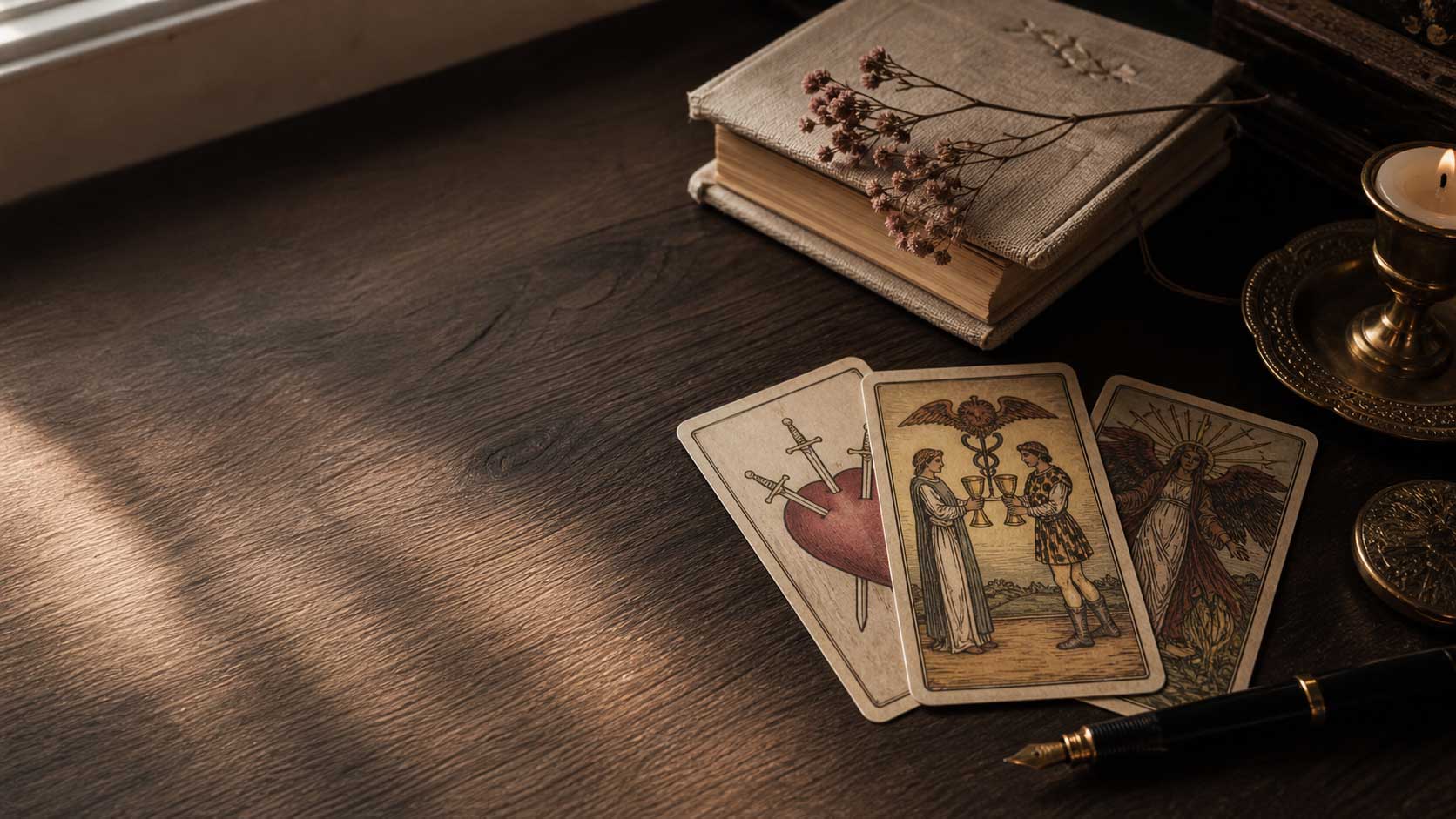
A reading can move quickly. You may want to remember the card positions, revisit a useful phrase, or avoid taking notes while listening. Recording can be a practical memory aid, provided the people involved have agreed to it.
The short answer: If you want to record a tarot reading, ask everyone who would be recorded before starting and agree on the purpose and use. Permission to keep a private recording is not permission to post it. If someone declines, ask about notes instead; a recording does not make the reading more authoritative.
Tarot clarity
Turn the card meaning into a useful next question
Use Eldrin to connect the symbolism to your real situation without turning one card into a fixed verdict.
Ask about your cards->Best when you want interpretation with context.
Ask while there is still room for an answer
Before a booked session, you could ask: “May I make an audio recording for my own notes? I will not share it. Please let me know if you prefer another arrangement.” Ask before activating the recorder. A device already running can make a request feel less optional.
The reader may have a policy, and you may have preferences of your own. If the reader supplies a recording, ask how it will be delivered and who can access it. This page offers a consent-centered practice, not a statement of recording law; service terms and requirements can vary.
Agree on what the recording includes
- Audio, video, a card photograph, or a written summary.
- Whether names and personal context will be included.
- Whether it is for private review or another explicitly agreed purpose.
- Where it will be saved and when you plan to remove it.
At a group reading, include everyone whose voice or image would be captured. A host’s enthusiasm does not settle a guest’s preference. Pause the recording if someone who has not agreed joins the conversation.
Keep review separate from publication
You may later want to share a striking sentence or ask a forum about the cards. That is a new use. Seek fresh permission where another person’s voice, image, or contribution would be shared, and leave out private information about anyone discussed.
A shortened anonymous description of your own question is often enough for further reflection. Removing a name may not remove identifying details, especially in a small community. You can choose to keep the material private rather than trying to make every detail safe to publish.
Make a small record you can actually use
A recording is not required to preserve the useful part of a reading. Try a note with four lines: the question, the cards and positions, the interpretation you want to consider, and the action you chose. Mark interpretations as interpretations, rather than turning them into statements about what will happen.
For example: “Two of Pentacles in the next-step position prompted me to compare my commitments. I will check my calendar before agreeing.” You can later assess whether the action helped without treating an accurate transcript as proof of a prediction.
Do not upload a private session by default
If you want AI help with wording, consider giving only your own short, de-identified summary. Do not assume permission for a personal recording includes permission to upload someone else’s voice or the full conversation to another service. Check the service’s actual controls rather than assuming a transcript stays only with you.
For shared settings, see reading tarot in public. When starting with Eldrin, a brief question and the relevant context can be enough; a private session recording is unnecessary.
Questions people ask
Can I share a recording of my reading online?
Do not assume permission to record includes permission to publish. Ask separately, agree on what may be included, and remove identifying details about people who have not agreed to participate.
What if the reader does not allow recording?
Accept the boundary and ask whether you can take brief notes or receive a summary. If recording is essential to you, clarify that before booking rather than recording secretly.